

Before it became a celebrated hub of culture, food, and heritage, Tucson, Arizona was the northernmost edge of Spanish colonial Mexico — and far before that, it was and still is home to the Tohono O’odham and Pascua Yaqui people. Today, this desert city continues to reflect centuries of history, resistance, and cultural fusion. As a first-generation Mexican-American raised in Tucson by immigrant parents from Nogales, Sonora, I know firsthand that this place is more than a destination — it’s a living, breathing story.
Tucson’s soul lives in its textures: adobe walls, murals that speak louder than words, and plates piled high with flavors that stretch across borders. From historic shrines to open-air markets and boundary-pushing cuisine, here’s my local guide to discovering the Tucson I know and love — one rooted in history, family, and community.
Barrio Viejo: Where History Breathes
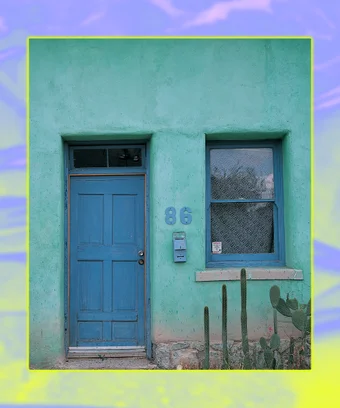
Start your journey in Barrio Viejo, Tucson’s oldest neighborhood. Once considered a slum, its colorful adobe homes and quiet, narrow streets now serve as a visual archive of Sonoran architecture and Mexican-American resilience. This area survived the destructive wave of mid-20th-century urban renewal and remains one of the few places that reflect Tucson’s original cultural blueprint.
Though much of the old neighborhood is now a mix of trendy businesses and residential streets, it still pulses with memory. Grab a bite at El Minuto Café or wander over to 5 Points Market — then take a moment to just walk and feel the echoes of those who came before.
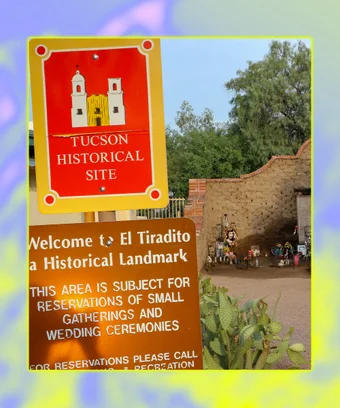
El Tiradito Shrine: A Sanctuary for the Castaway
In the heart of Barrio Viejo, you’ll find El Tiradito, a modest shrine with a story as tangled as any telenovela. Legend says that Juan Oliveras, who had an affair with his mother-in-law, was murdered by her husband and buried in unconsecrated ground. Denied a holy resting place, his grave became a sacred space for outsiders and heartbroken souls.
Visitors light candles and leave prayers, hoping that if the flame burns through the night, their wishes will be granted. Every time I visit, I see fresh wax dripping down its walls, silent witnesses to grief, hope, and faith. For many in Tucson’s Latine community, it’s not just a legend — it’s a deeply emotional tradition.
Mercado San Agustin & MSA Annex: A New Kind of Plaza
At the base of Sentinel Peak (aka “A Mountain”) lies Mercado San Agustin, an open-air plaza where old meets new. You’ll find Seis Kitchen, serving Sonoran-style tacos and tortas, and La Estrella Bakery, where pan dulce practically flies off the shelves. It’s a weekend ritual for many Tucson families, including mine, to sip café de olla and browse artisan stalls.
Just next door, MSA Annex — a collection of repurposed shipping containers — expands the mercado’s energy. There, you can grab birria ramen at Rollies Mexican Patio, pick up locally roasted beans at Decibel Coffee Works, and shop for thoughtful gifts at Why I Love Where I Live.
Mission San Xavier del Bac: Faith and Roots
No visit is complete without experiencing Mission San Xavier del Bac. Known as “The White Dove of the Desert,” this 18th-century Spanish mission is a masterpiece of baroque architecture and spiritual reflection. But beyond its beauty lies a deeper truth: the land belongs to the Tohono O’odham Nation.
As a child, I would climb the hill beside the church to reach the cross overlooking the desert — a moment of silence that felt sacred. Afterward, I’d savor fresh fry bread from Santa Rosa Café, browse handmade jewelry, or stop at the San Xavier Co-Op Farm for traditional ingredients grown with love by O’odham farmers. Just remember: you’re a guest on Native land, and respect is non-negotiable.
Tumerico: Vegan, Vibrant, and Very Tucson
Tumerico is a small-but-mighty Latina-owned restaurant redefining Mexican food with a plant-based twist. It’s been named the top vegan spot in the country — and one bite of the tacos de papa or rich mole will tell you why.
The environment is cozy, decorated with colorful art and always humming with community. On one visit, I watched a family teach their young kids Spanish using the menu as a lesson plan. That’s what makes Tumerico special — it’s a space where food, language, and love come together.
El Güero Canelo: The Sonoran Hot Dog King
You can’t talk about Tucson without honoring El Güero Canelo. What started as a modest food truck is now a culinary institution with three locations and a city-wide following. David Contreras, the man behind it all, even has an official city day in his honor.
The main attraction? The Sonoran hot dog — a bacon-wrapped beauty on a fluffy bolillo bun, topped with beans, onions, mayo, salsa, and more. Pair it with a carne asada torta and a refreshing jamaica, and you’ll understand how Tucson and Sonora are connected by more than just a border — they share a flavor.
Tucson Meet Yourself: The City’s Cultural Heartbeat
If you’re in town in October, time your trip around Tucson Meet Yourself, an annual celebration of the city’s multicultural roots. Locals lovingly call it “Tucson Eat Yourself” — and for good reason.
This isn’t your average food fest. You’ll find everything from O’odham fry bread to Salvadoran pupusas to Turkish coffee. The real magic, though, happens on stage: Indigenous dances, Afro-Peruvian performances, and folklórico all remind us that culture is a living, evolving force — and Tucson is its beating heart.